
Shop & Commercial Floor Epoxy in Evansville
From a pole-barn workshop to an auto bay or a warehouse aisle, working floors need a coating chosen for traffic, chemicals and footing, not just looks.
Get a Free QuoteThe problem: working floors take a beating
A shop floor sees more than a home garage. Rolling jacks, jack stands, creepers, forklifts and pallet jacks wear paths into concrete. Oil, coolant, brake fluid and solvents soak in and stain. Bare concrete dusts as it wears, and that dust ends up on equipment and inventory. In the Tri-State, winter adds salt slush tracked in by vehicles. Evansville staged 6,000 tons of salt for the January 2026 storm alone. Summer brings humid air that can settle on cool slabs.
Footing matters too. A smooth, glossy floor that looks great dry can be a slip hazard with oil or water on it. In a shop with customers or employees, traction is a safety question.
Downtime is the last piece. A business cannot always close for a week while a floor cures, and a home shop owner may have projects waiting. The right plan balances the coating system, the cure time and the schedule, rather than picking a product first and working around it.
The solution: coatings built for the job
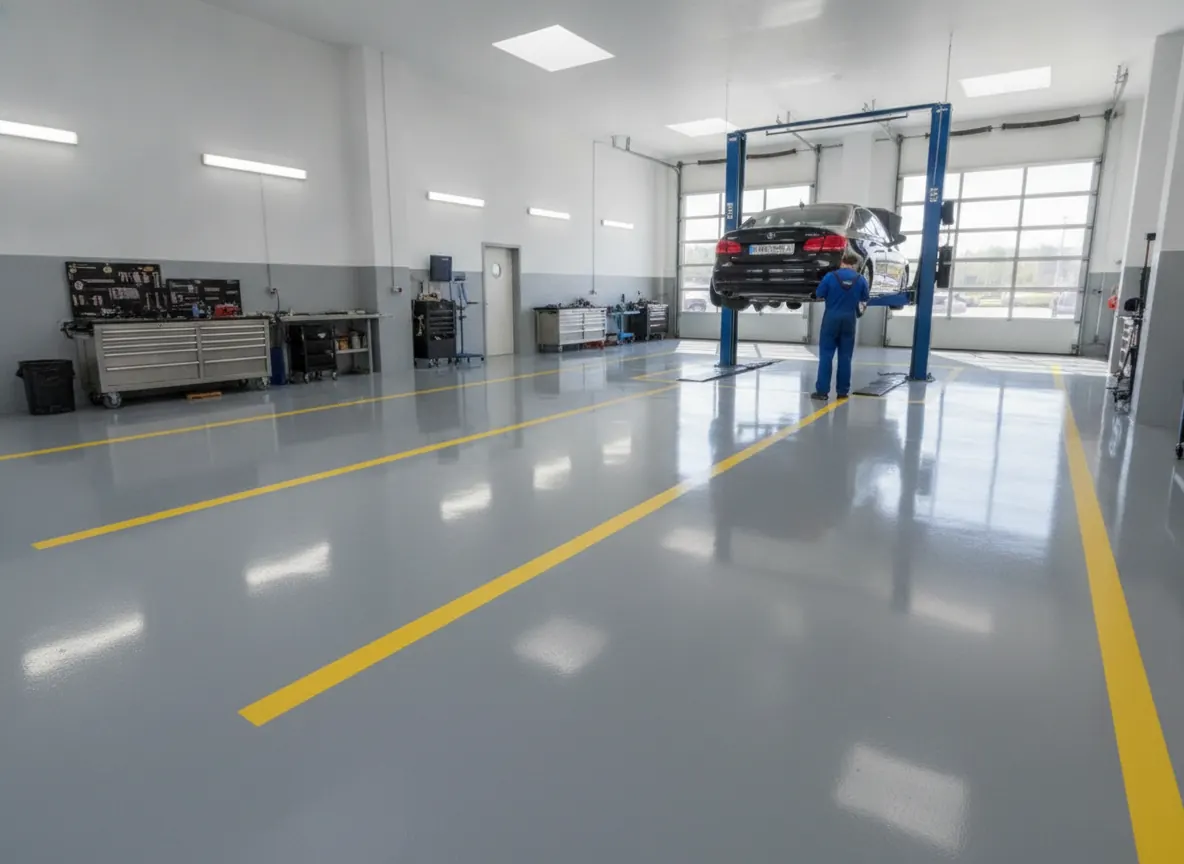
Shop and commercial systems are chosen around how the space is used:
- Home shops and pole barns: flake or solid epoxy systems with a tough topcoat, often with anti-slip grit near benches and lifts.
- Auto bays: chemical-resistant topcoats that handle oil and fluids, and that resist hot-tire lift.
- Warehouses and storage: solid-color systems with high-build coats for traffic lanes, plus line striping.
- Light retail and showrooms: decorative flake or metallic epoxy with a durable clear coat.
Safety striping and anti-slip options
A coated floor is a good base for clear floor markings. Common add-ons include:
- Safety striping: yellow or white lane lines, walkways and crosswalks painted or coated into the system.
- Hazard zones: hatched or contrasting areas around lifts, electrical panels, exits and machinery.
- Bay and parking lines: numbered bays or parking stalls in a shop or storage building.
- Anti-slip aggregate: grit broadcast into or mixed into the topcoat, with heavier texture in wet or oily zones and lighter texture where carts roll.
Your own safety requirements and any rules that apply to your workplace should guide the layout. The installer coats the floor; you decide where lines belong. For more on traction, see are epoxy garage floors slippery?, and for vehicles see hot tire pickup on garage floors.
How a shop floor project works
The core steps match our residential process, scaled for bigger spaces and tighter schedules:
Walkthrough and scope
Measure the space, note traffic, chemicals and equipment, and plan striping and anti-slip zones.
Schedule around operations
Plan the work in phases, after hours or over a weekend where possible. Fast-cure polyaspartic topcoats can shorten downtime.
Grind, degrease and repair
Oil-soaked concrete is cleaned and ground, and cracks and joints are repaired. See concrete prep and crack repair.
Coating system
Base and build coats, optional flake, then a chemical-resistant topcoat with anti-slip as specified.
Striping and return to service
Lines and markings go down, then the floor cures per product directions with the space ventilated before equipment returns.
Typical shop and commercial floor pricing
Typical installed ranges, 2025–2026 (estimates only): solid-color epoxy runs about $5–$8 per sq ft, flake epoxy systems about $5.50–$10, polyaspartic flake systems about $6–$12, and metallic about $10–$16. A 750 sq ft home shop in solid epoxy, for example, would typically fall around $3,750–$6,000. Larger floors, heavy repairs, striping and anti-slip all affect the total. Compare systems on the cost guide, then request a free quote with your square footage and how the space is used.
Shop & Commercial Floors FAQ
What is the best floor coating for an auto repair shop?
Auto bays usually need a system with a chemical-resistant topcoat that handles oil, brake fluid and coolant, resists hot-tire lift, and has anti-slip texture where people work. Many shops choose a solid or flake epoxy base with a tough topcoat. The right choice depends on the chemicals you use, lift locations and how much downtime you can accept.
Can you add safety striping to an epoxy floor?
Yes. Lane lines, walkways, hazard hatching and bay numbers can be added as part of the coating system, usually after the base coats and before or with the final topcoat. You decide the layout based on your own safety needs and any workplace rules. The installer can mark it out with you during the walkthrough.
How do you make an epoxy shop floor less slippery?
Installers add anti-slip aggregate to the topcoat, either mixed in or broadcast onto it. Heavier texture works in wet or oily zones, and lighter texture suits areas where carts and creepers roll. Flake systems also give more grip than a smooth solid color. Keeping spills cleaned up quickly matters just as much as the texture.
Can a shop floor be coated without closing for a week?
Often the work can be phased so part of the space stays in use, or done over a weekend. Fast-curing polyaspartic topcoats can shorten the time before foot and vehicle traffic. Exact cure times depend on the products and temperature, so get the installer's written schedule and follow the product directions before reopening.
Ready for a garage floor that cleans up in minutes?
Free, no-pressure quotes across Evansville, Newburgh, Henderson and the Tri-State.