
Floor size
Price is mostly figured per square foot, so a 3-car garage costs more than a 1-car. Very small floors can cost more per foot because setup, grinding equipment and travel are fixed costs no matter the size.
Most 2-car garages in the Evansville area land between about $2,500 and $6,000 depending on the coating system. Here are typical ranges, what drives the price, and a quick calculator.
Get a Free QuoteThese are typical installed ranges for 2025–2026, not quotes. They assume a sound slab with normal prep.
| System | Per sq ft | 1-car (~250 sq ft) | 2-car (~500 sq ft) | 3-car (~750 sq ft) |
|---|---|---|---|---|
| Solid-color epoxy | $5–$8 | $1,250–$2,000 | $2,500–$4,000 | $3,750–$6,000 |
| Flake epoxy system | $5.50–$10 | $1,400–$2,500 | $2,750–$5,000 | $4,100–$7,500 |
| Polyaspartic flake system | $6–$12 | $1,500–$3,000 | $3,000–$6,000 | $4,500–$9,000 |
| Metallic epoxy | $10–$16 | $2,500–$4,000 | $5,000–$8,000 | $7,500–$12,000 |
Enter your square footage, pick a system and see a rough installed range. A 2-car garage is usually around 500 sq ft; measure length times width for yours.
Estimated range: $2,750–$5,000
Estimate only. Crack repair and slab condition can change the price; your quote comes from an on-site look.
Price is mostly figured per square foot, so a 3-car garage costs more than a 1-car. Very small floors can cost more per foot because setup, grinding equipment and travel are fixed costs no matter the size.
Solid-color epoxy is the most affordable. A flake broadcast adds material and labor, polyaspartic top coats cost more per gallon, and metallic epoxy takes the most skill and time. Compare systems in our flake vs metallic vs solid guide.
Every pro install should include diamond grinding. Cracks, pitting from road salt, old paint or failed coatings add time. Older slabs, common in a city where the median home was built in 1961, often need more prep and crack repair.
If a moisture test shows vapor pushing up through the slab, a moisture-mitigating primer adds about $1 per sq ft. It is more common on basement floors and slabs without a vapor barrier underneath.
Full flake coverage, custom flake blends and metallic pigments raise material cost. Flakes or custom colors typically add about $0.50–$2.00 per sq ft over a plain solid color.
Stem walls, steps, garage door thresholds, safety striping and anti-slip additives each add a little. Ask for them to be itemized on your quote so you can choose what matters.
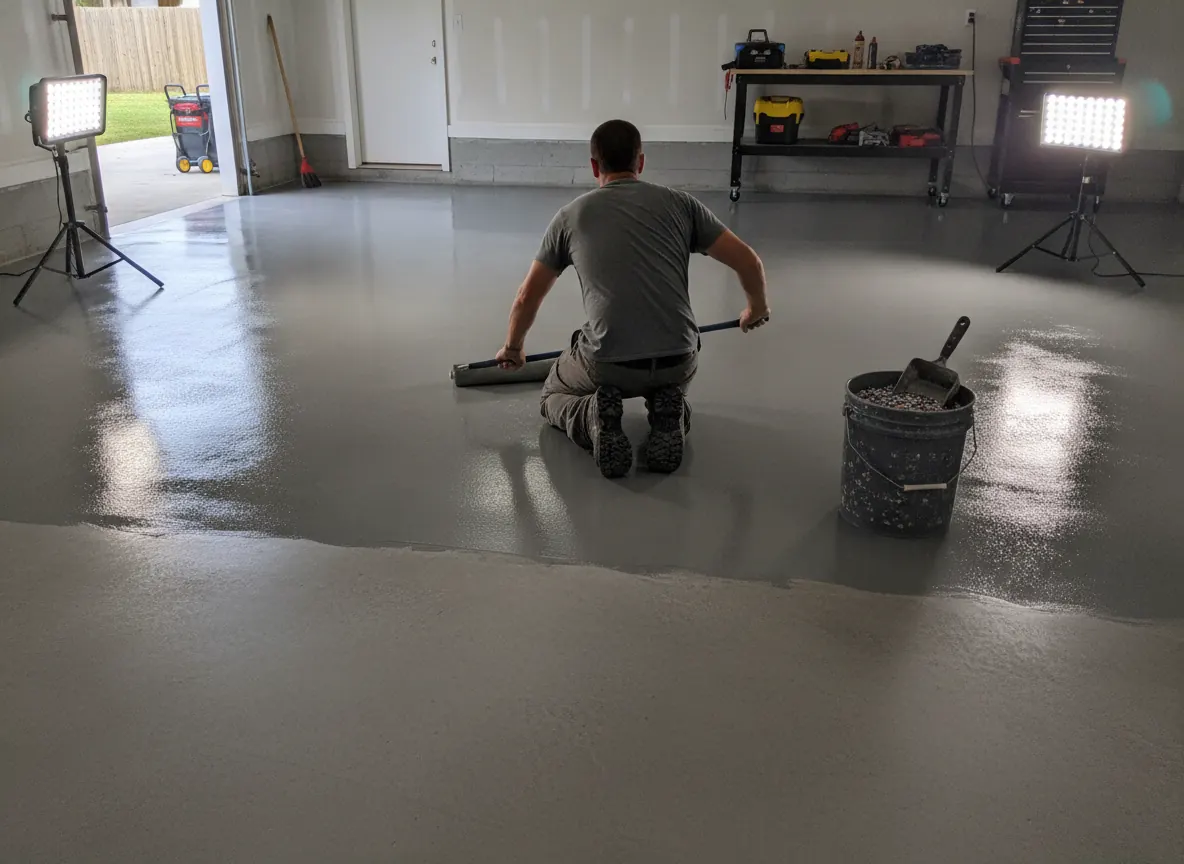
A fair quote for a garage floor coating in the Evansville area usually covers:
Major crack repair, resurfacing and moisture barriers are often priced separately. Ask for written warranty terms with any quote. See how each step works on our process page.
A DIY epoxy kit costs about $50–$600 in materials, which looks like a bargain next to a $3,000 pro install. The difference is in what you get. Most kits are water-based epoxy that typically lasts 3–5 years, and they depend on acid etching, which does less than diamond grinding to help the coating bond. In a Tri-State garage that sees salty slush all winter and hot tires all summer, thin DIY coats are more likely to peel or show hot-tire pickup.
A professional solid epoxy floor commonly lasts 10–20 years, and polyaspartic systems 10–20 years or more. Spread over its life, a pro floor can cost less per year than redoing a kit several times. If you do go DIY, ventilate well and follow the product directions. Read more in DIY epoxy kit vs professional install.
A standard 2-car garage of about 500 sq ft typically runs $2,500–$4,000 for solid-color epoxy, $2,750–$5,000 for a flake epoxy system and $3,000–$6,000 for a polyaspartic flake system. These are 2025–2026 estimates. Crack repair, a moisture barrier or heavy slab damage can add to the total, and the final price comes from an on-site look.
Often, for a garage. Polyaspartic runs about $6–$12 per sq ft versus $5–$8 for solid epoxy, but it cures faster, resists yellowing in sunlight and handles temperature swings well. Many homeowners see it as worth paying more for a faster return to use and a long service life. A flake epoxy system with a good top coat is a solid lower-cost choice.
Quotes differ mainly in prep and materials. One installer may diamond grind, repair every crack and use thick, high-solids coats, while another acid etches and rolls thin layers. Compare the prep method, number of coats, product type, flake coverage, cure time and written warranty terms rather than just the bottom line.
Usually, yes. Crack and chip patching typically runs about $25–$250 depending on how much repair the slab needs. Hairline cracks are often filled as part of normal prep, while wide cracks, spalling or pitted areas take more material and labor. Badly damaged slabs may need resurfacing, which runs about $3–$5 per sq ft.
Only if testing shows moisture moving up through the slab. Moisture pushing up from below is a common cause of coatings lifting, especially on basement floors and older slabs. A moisture-mitigating primer typically adds about $1 per sq ft. An installer should test before recommending it rather than adding it automatically.
Up front, yes. DIY kits cost about $50–$600 for materials only. They are usually water-based epoxy that lasts around 3–5 years, and most rely on acid etching rather than diamond grinding. A professional system costs more but commonly lasts 10–20 years or longer, so the cost per year can end up closer than the sticker prices suggest.
Free, no-pressure quotes across Evansville, Newburgh, Henderson and the Tri-State.