
Is Garage Floor Epoxy Worth It in Evansville?
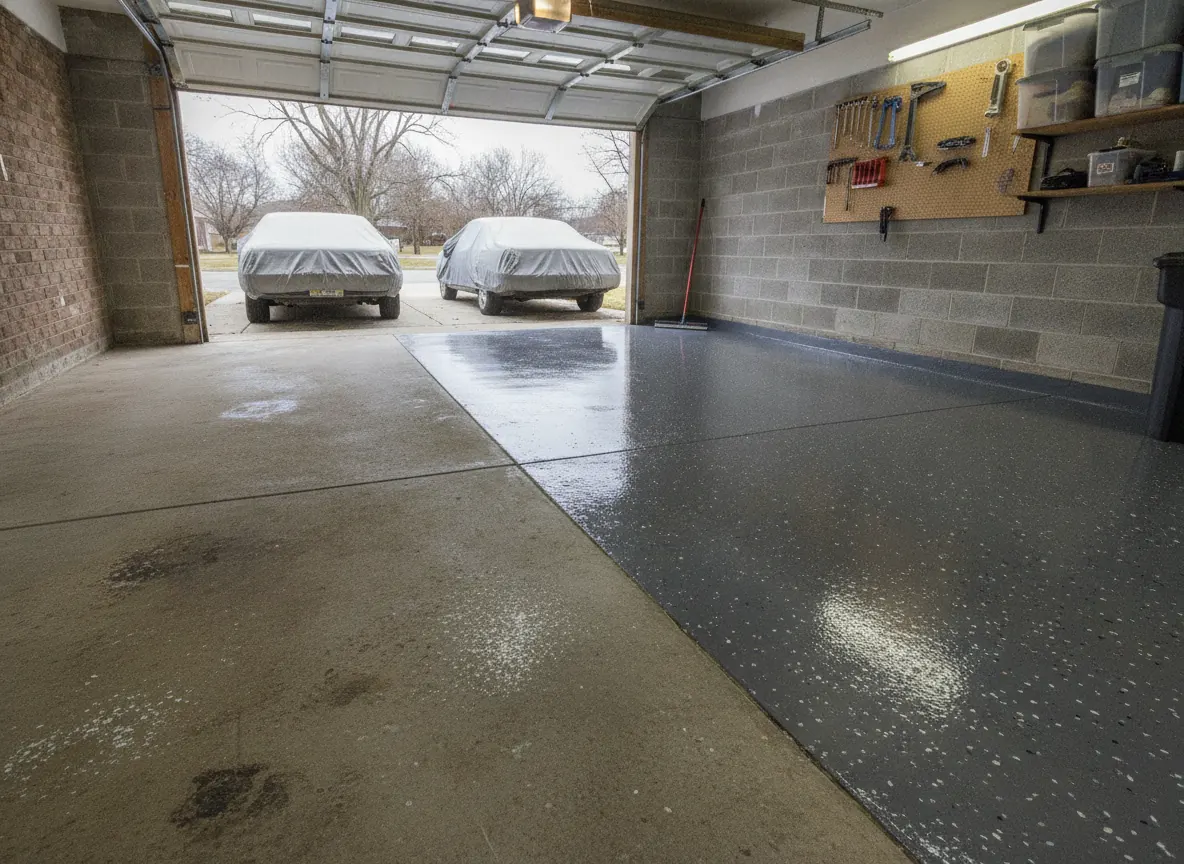
Is garage floor epoxy worth it? For most Evansville-area homeowners who own the house, plan to stay a few years and park on the floor every day, yes. A professionally installed solid epoxy floor typically costs $2,500–$4,000 for a 2-car garage and commonly lasts 10–20 years, so it works out to roughly $125–$400 a year. It is less likely to be worth it if you rent, are moving soon, or the slab has moving cracks or moisture nobody has checked.
Here is how to tell which side of that line your garage is on.
The cost-per-year math behind “worth it”
A sticker price on its own makes a garage coating look expensive, so spread it over the years you’ll actually use the floor. These are our typical installed ranges for 2025–2026 (estimates, not quotes) for a 2-car garage of about 500 sq ft:
| Option | 2-car price | Typical lifespan |
|---|---|---|
| Water-based DIY kit | $50–$600 (materials) | 3–5 years |
| Solid-color epoxy | $2,500–$4,000 | 10–20 years |
| Polyaspartic flake system | $3,000–$6,000 | 10–20+ years |
In raw dollars, a kit can come out cheaper per year. Two things don’t show up in that number: your own weekends, done again two or three times over the life of one professional floor, and the acid-etch prep most kits rely on, which bonds less reliably than diamond grinding. Full numbers by garage size are on our garage floor epoxy cost page, and the head-to-head is in DIY kit vs professional install.
When a garage floor coating pays off in the Tri-State
Winter salt. The Vanderburgh County Highway Department typically spreads 7,000–11,000 tons of salt a winter, and the city had 6,000 tons ready for the January 2026 storm. Across the bridges, Henderson County has used more than 2,000 tons in a single winter. All of that brine drips off wheel wells onto the garage floor from December to March. A sealed, coated floor lets you squeegee it out the door instead of letting it soak into bare concrete.
Summer heat. Evansville averages about 41 days a year at or above 90°F, and late July 2025 brought dewpoints in the mid-70s to low 80s. Tires come off hot pavement and sit on the same two spots every evening. That’s where thin coatings lift, and where a properly built system earns its price.
Muggy months. The muggy stretch runs roughly May 10 to October 13. A floor you can wipe or hose down is simply easier to keep clean through that much damp air.
When epoxy may not be worth it
- You rent. About 54.6% of Evansville homes are owner-occupied, so plenty of people here park in a garage that belongs to someone else. That’s the owner’s decision, not yours.
- You’re moving within a year or two. We don’t have local data showing a coated floor raises a sale price, so we won’t claim it does.
- The slab is still moving. Cracks from settling or heaving can come back through any coating. That needs a different fix first.
- Moisture hasn’t been tested. Vapor coming up through the slab can push a coating off. If testing shows it, a moisture barrier primer adds about $1 per sq ft. Worth knowing before you decide, not after.
Is epoxy worth it on an older slab or a newer one?
The age of the house changes the math more than most people expect. The median Evansville home was built in 1961. Bayard Park houses date mostly from 1901–1915, Lincolnshire filled in during the 1920s, and the First Avenue area grew after World War II. Garages in those neighborhoods often carry decades of oil, old paint and patched cracks. They can still be coated well, but the prep costs more: crack and chip patching typically runs $25–$250, and resurfacing a badly damaged slab runs about $3–$5 per sq ft. Our concrete prep and crack repair page explains what that involves.
On the newer end, Warrick County has the newest housing in the metro, with a median build year of 1986. Newburgh’s median is 1976, and subdivisions such as Hillside Meadows off Sharon Road include plans with 2-car garages. Haubstadt, now a bedroom community of Evansville, sits at 1983. Those slabs often need less repair, so more of your budget goes into the coating itself. If you’re east of town, see our Newburgh garage floor epoxy page.
Which coating system gives the most value?
“Worth it” also depends on what you buy. Solid-color epoxy ($5–$8 per sq ft) is the lowest-cost professional option. A flake system ($5.50–$10) adds texture and hides salt film and dust between cleanings. A polyaspartic flake system ($6–$12) costs more but carries the longest typical life, 10–20+ years. Metallic epoxy ($10–$16) is mostly a looks decision; it’s worth it if you want a showpiece floor, not just a practical one.
Whichever you choose, ask each installer how the slab will be prepared, whether moisture will be tested, how many coats go down, and for the written warranty terms, including what’s excluded.
The bottom line
If you own your home, park inside year-round and the slab is sound, a professional coating is usually worth it here, because salt season and 90-degree summers are hard on bare concrete. If you rent, are leaving soon or have unchecked cracks or moisture, wait or fix the slab first. The quickest way to know for your garage is to have someone look at it. Get a free quote and we’ll connect you with independent local companies who can check your slab in person.
Is garage floor epoxy worth it? Quick answers
Is garage floor epoxy worth it for a 1-car garage?
It can be. A 1-car garage of about 250 square feet typically runs $1,250 to $2,000 for solid-color epoxy and $1,500 to $3,000 for a polyaspartic flake system (2025–2026 estimates). The value math works the same way as a bigger garage: compare that price with how many years you expect to park on the floor.
Is a DIY epoxy kit worth it instead?
For a newer, clean slab and a tight budget, a kit can make sense. Kits cost about $50 to $600 in materials, but most are water-based epoxy that typically lasts 3 to 5 years and rely on acid etching. On an older, oil-stained slab, a professionally ground and coated floor usually holds up far better.
Is epoxy worth it if I’m selling my house soon?
We don’t have local data showing that a coated garage floor raises a sale price, so we won’t promise that it does. If you’re moving within a year or two, a coating is mostly a choice for your own use. If you’re staying, the 10-to-20-year typical life of a professional floor is where the value is.