
Can You Re-Epoxy a Garage Floor? An Evansville Guide
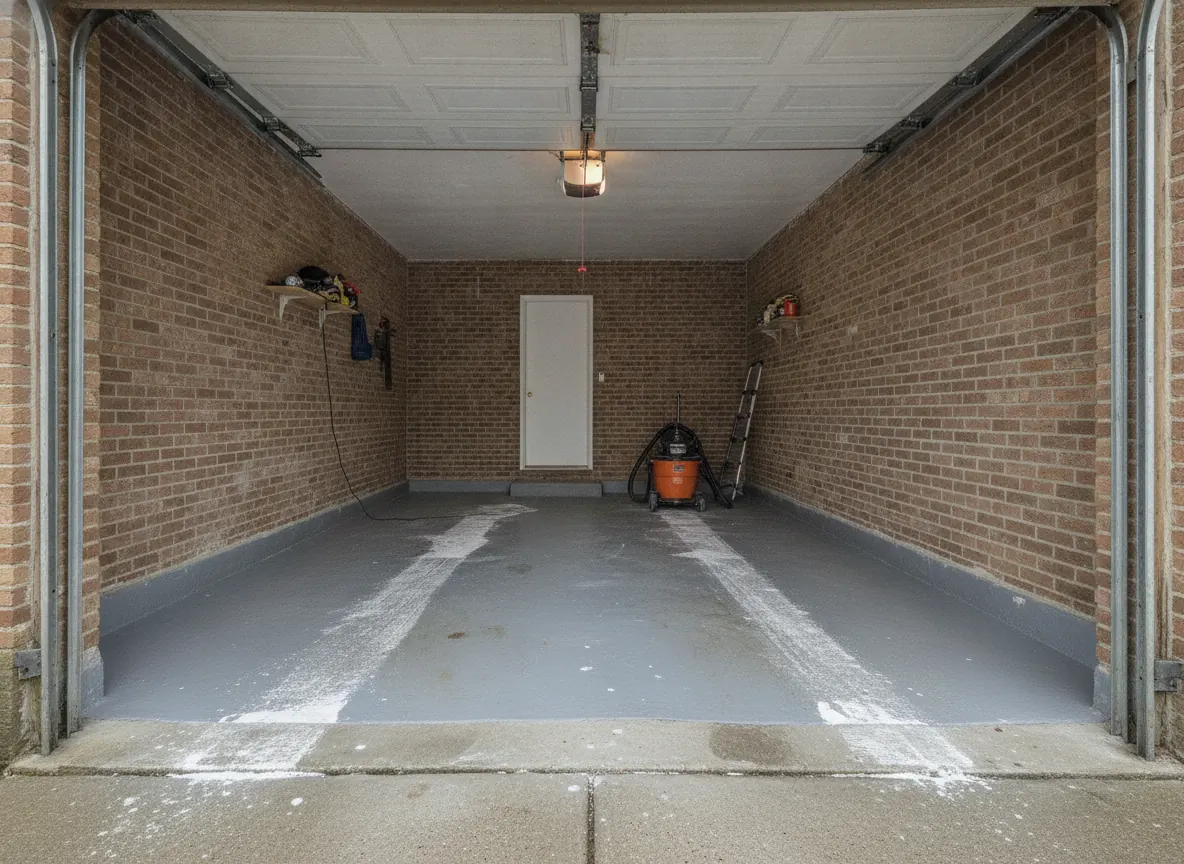
Yes, you can re-epoxy a garage floor, but the right way to do it depends on the coating that’s already there. If the old epoxy is dull and scratched but still stuck tight to the concrete, an installer can usually scuff it and roll on a fresh top coat. If it’s peeling in the tire lanes, bubbling or lifting near the door, it typically has to be ground off down to bare concrete before a new system goes down, because a new coat is only as strong as what it sits on.
Why so many Evansville garages are due for a redo
Evansville’s median home was built in 1961, Henderson’s in 1974 and Newburgh’s in 1976. A lot of those garages have been painted or coated with a store-bought kit at least once. Water-based DIY epoxy typically lasts about 3 to 5 years, so a kit rolled on a few summers ago in a West Side ranch or a Lincolnshire bungalow may already be letting go.
Professional floors last longer, but not forever. Professionally installed solid epoxy commonly lasts 10 to 20 years, and polyaspartic 10 to 20 years or more. Even a well-installed floor from the mid-2000s can be near the end of its run, especially if it gets daily parking and winter slush.
Recoat or strip? How to tell what your garage floor needs
Walk the floor with good light before you call anyone. A light recoat may be enough when:
- The coating is faded, dull or lightly scratched, but has no loose edges anywhere.
- Stains sit on top of the finish rather than soaking into bare concrete.
- The concrete underneath hasn’t cracked through the coating.
The old coating usually needs to come off when:
- It’s peeling in sheets or lifting where the tires sit (see hot tire pickup).
- It’s bubbling, or flaking near the door where salty meltwater collects.
- Bare concrete shows through in patches.
A simple check: if you can lift an edge with a fingernail or a putty knife, that area has already let go of the concrete. Coating over it ties the new floor to something that is already failing.
What re-epoxying a garage floor actually involves
For a full redo, the installer removes the old coating with diamond grinding, which takes off failing material, sealers and the weak top layer of the concrete in one pass. Acid etching, the prep most DIY kits rely on, can’t remove an old coating, which is one reason a second kit over a first one rarely lasts. Our concrete prep and crack repair page walks through grinding step by step.
Once the slab is bare, the repairs that were hidden under the old coating get handled: cracks and chips filled and ground flush, and, on a badly damaged slab, a resurfacing layer. Then the new system goes down, from base coat to top coat.
For a recoat, the work is lighter. The floor is cleaned and degreased, the existing finish is abraded so the new coat can grip, and a top coat that’s compatible with the old one is applied. Ask the installer what product they’ll use and why it suits what’s already on your floor.
Tri-State conditions that wear a garage coating out
Knowing why the first floor failed helps you choose the second one. In this area, four things do most of the damage:
- Road salt. Vanderburgh County typically uses 7,000 to 11,000 tons of salt a winter, and Henderson County has used more than 2,000 tons in a single winter. That brine rides into the garage on every tire. More in road salt and garage floor coatings.
- Summer heat. The area averages about 41 days a year at or above 90°F. Hot tires soften thin coatings, which is how tire-lane peeling starts.
- Humidity. The muggy season runs roughly May 10 to October 13, and humidity changes how products flow and cure, so product directions on temperature and humidity matter.
- Floodwater. The April 2025 Ohio River crest reached just under 48 feet at Evansville and just under 51 feet at Newburgh, and homes in the Beals-Reed area of Henderson County were surrounded or flooded. If your garage took water, have the slab checked for moisture before anything is recoated.
For a second floor that has to handle salt and hot tires, many homeowners look at a flake system or a polyaspartic garage floor coating, which has a typical lifespan of 10 to 20 years or more.
What a garage floor redo typically costs
Typical installed ranges, 2025–2026, for a 2-car garage of about 500 sq ft (estimates only; your price comes from an on-site look):
- Solid-color epoxy: $2,500–$4,000
- Flake epoxy system: $2,750–$5,000
- Polyaspartic flake system: $3,000–$6,000
On top of that, crack and chip patching typically runs $25–$250, resurfacing a badly damaged slab about $3–$5 per sq ft, and a moisture barrier about $1 per sq ft. Removing an old coating adds grinding time, so mention it when you ask for a quote. The full table, including 1-car and 3-car sizes, is on our garage floor epoxy cost page. If you’re weighing another kit instead, read DIY kit vs professional install first.
Questions homeowners ask about recoating
Can you put new epoxy over old epoxy?
Yes, if the old coating is still stuck tight everywhere. The installer cleans it, abrades the surface so the new coat can grip, and applies a compatible top coat. If any of it is peeling or lifting, coating over it just ties the new floor to a layer that is already letting go, so it usually has to be ground off first.
Does an old DIY kit have to come off before a professional coating?
Usually. Water-based kits are thin and often went down over acid-etched concrete, and a professional system needs to grip sound, ground concrete. Diamond grinding removes the old kit along with the weak top layer of the slab. Mention the old coating when you ask for a quote so removal is part of the price.
What time of year is easiest for a garage floor redo in Evansville?
Coatings need air and slab temperatures within the product’s range, and Evansville’s January lows average about 25°F, while the muggy season runs roughly May 10 to October 13. Installers work through both by heating the space or picking suitable products, but cure times change. Ask how they plan for the weather on your install date.
Get your old floor looked at
Whether your floor needs a fresh top coat or a full strip and recoat is something an installer can tell in a few minutes on site. Request a free quote, tell us what’s on the floor now, and we’ll connect you with an independent local company that serves Evansville, Newburgh, Henderson and nearby towns. You can also call (877) 265-2390.